Focus Areas
Product Design • UX Research • Usability Testing • Accessibility • Design Systems • System Thinking
Project Details
Location
Edmonds, WA
Role
Product Designer
Platform
Mobile App
Catecory
Health & Wellness
Timeline
Jan 2026 - Feb 2026
Challenge
The Product Goal
DailyCare needed to help neurodivergent users and older adults manage daily wellness routines without cognitive overload or emotional fatigue.
The UX Challenge
Most wellness apps rely on rigid systems, aggressive reminders, and overstimulating visuals. These patterns create confusion, pressure, and inconsistent engagement — especially for users managing complex health routines.
My Responsibility
I reviewed accessibility research, restructured the information architecture, redesigned onboarding, and built a new visual system focused on calm, predictable interaction patterns.
Users
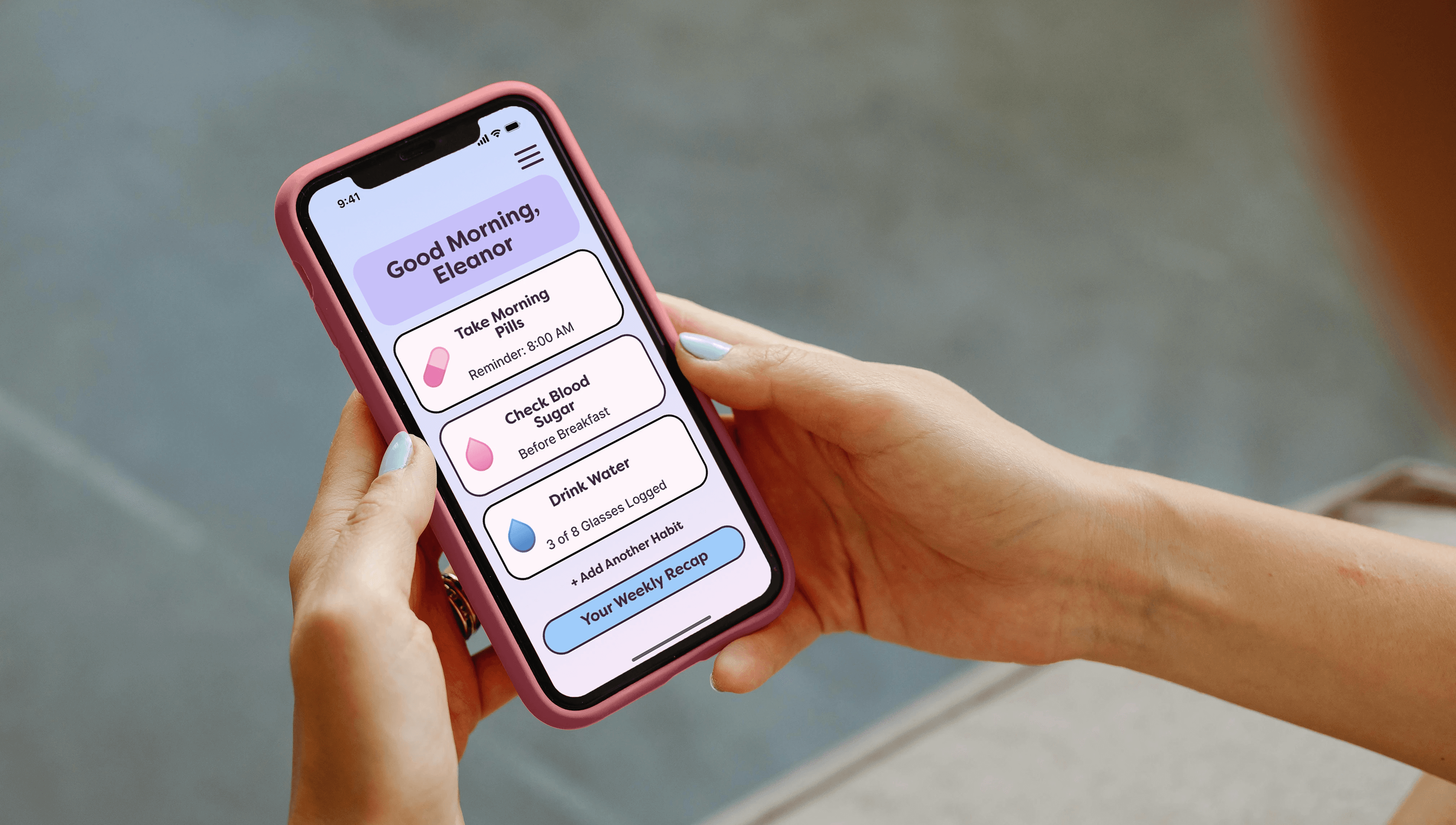
Eleanor is a 68‑year‑old user who manages daily medication, blood sugar checks, and hydration goals. She prefers gentle reminders, minimal onboarding, and clear visual structure. Reward‑heavy apps feel exhausting, and she often abandons them after a few days because the experience feels overwhelming. DailyCare’s redesign centers her needs by focusing on calm visuals, predictable flows, and low‑pressure motivation.
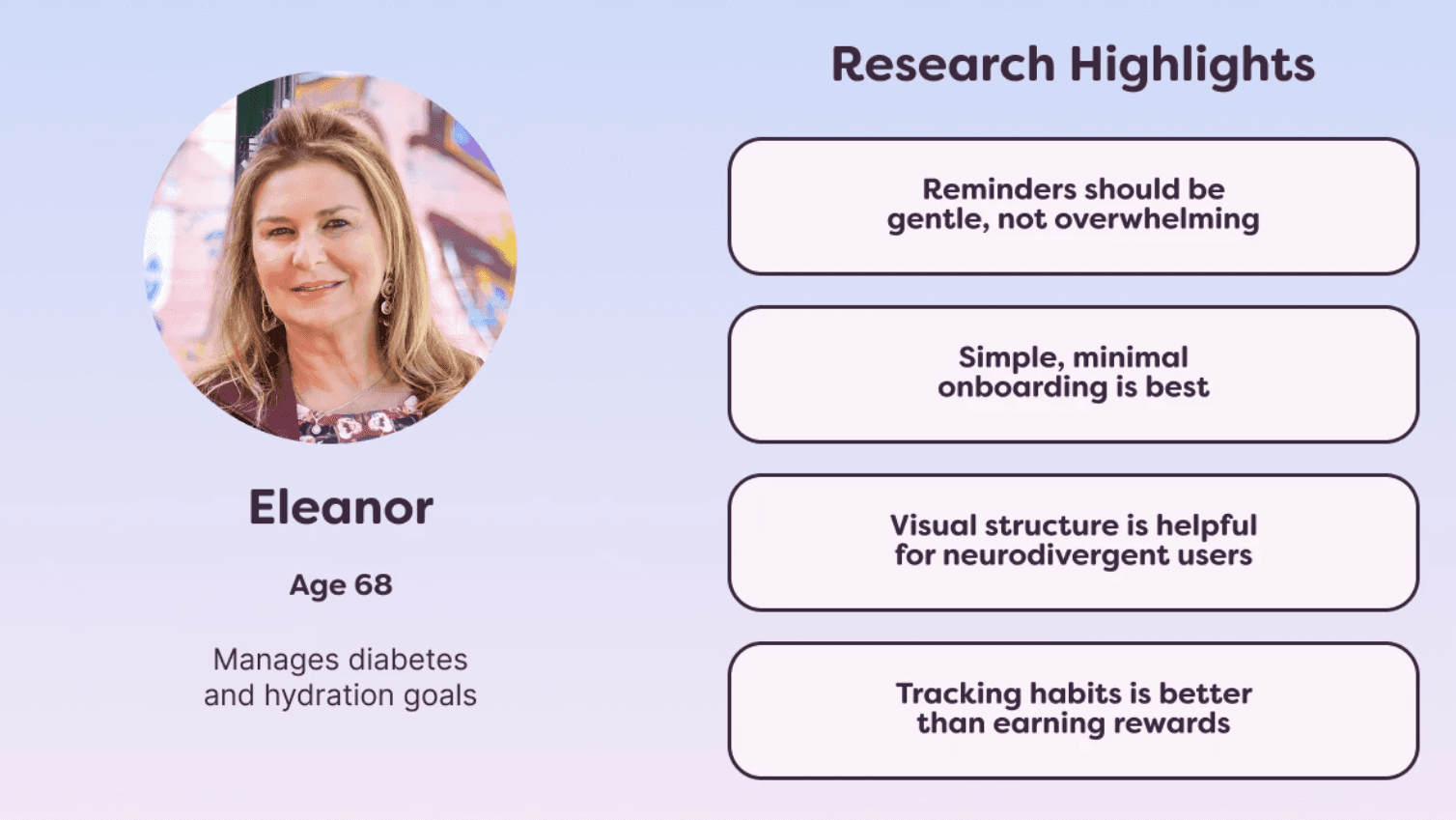
Clear user needs shaped every design decision, especially around cognitive load, motivation, and accessibility.
Contraints & Challenges
DailyCare needed to support two very different user groups at the same time: neurodivergent users and older adults managing daily wellness routines. Both groups required a calm and predictable experience, which created several design constraints. Motivation needed to feel supportive rather than pressured. Visual hierarchy had to remain clear without adding stimulation. Reminders needed to be gentle and easy to customize.
The redesign also required reducing steps without losing clarity. Onboarding had to be simplified so users could begin tracking habits quickly. Notification fatigue needed to be prevented through careful timing and tone. Accessibility standards had to be maintained throughout the interface, including color contrast, typography, and interaction patterns. These constraints shaped every design decision and guided the creation of a calmer and more sustainable habit tracking experience.
Research Insights
A review of existing wellness apps and public user feedback revealed several consistent patterns. Rigid tracking systems often felt overwhelming. Reward‑heavy designs created emotional burnout. Users preferred gentle reminders instead of accountability pressure. Simplified onboarding increased willingness to continue setup. Clear visual structure improved comprehension and confidence.
These insights guided the redesign and shaped the goal of creating a calm and predictable experience that supports long‑term consistency without overstimulation or pressure.
Process
Research and Analysis
I began by reviewing existing studies on cognitive load, motivation patterns, and accessibility needs for neurodivergent users and older adults. I analyzed competing wellness apps to identify common friction points, including overwhelming onboarding flows, unclear visual hierarchy, and pressure‑based motivation systems. This helped define the core usability problems DailyCare needed to solve.
Information Architecture
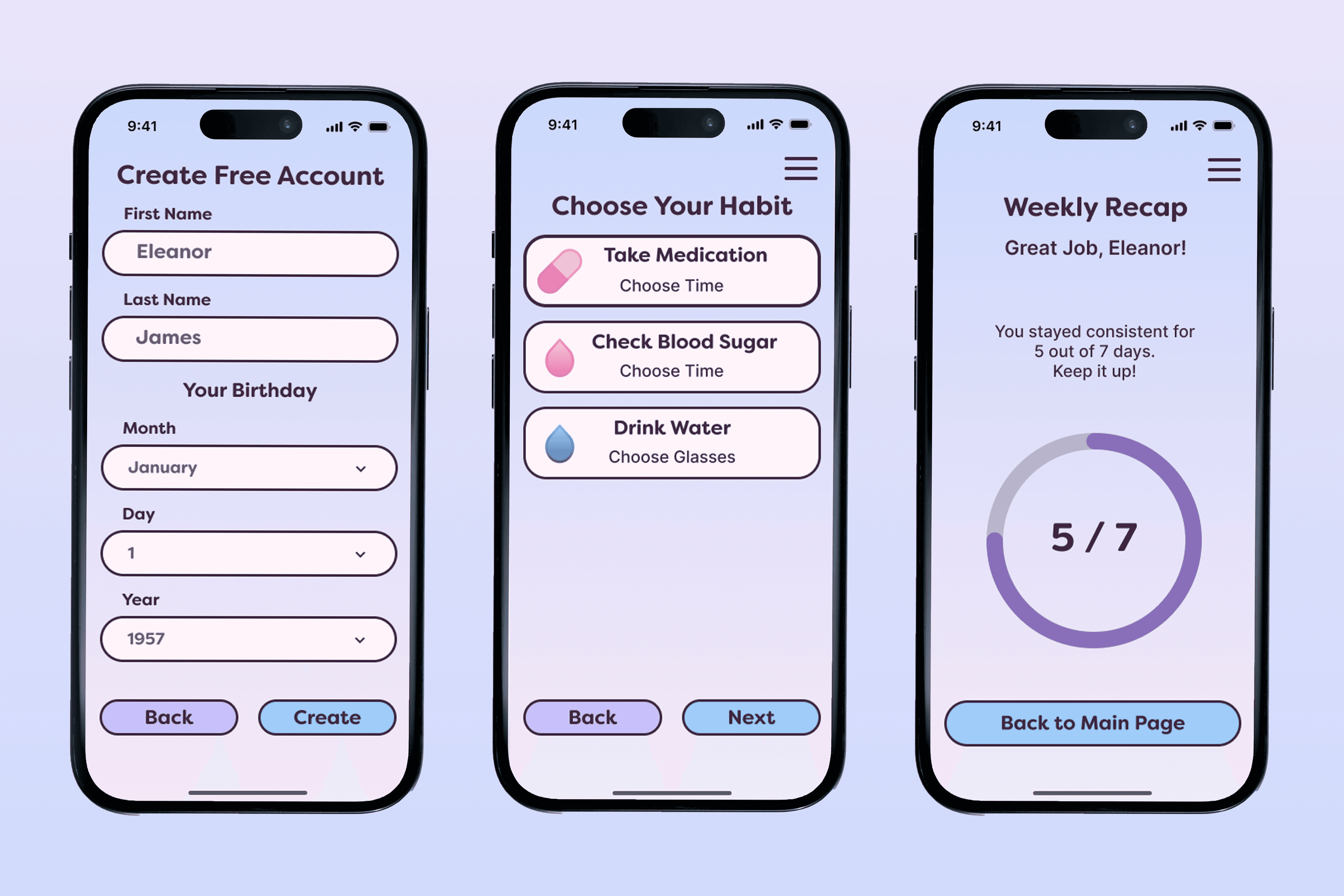
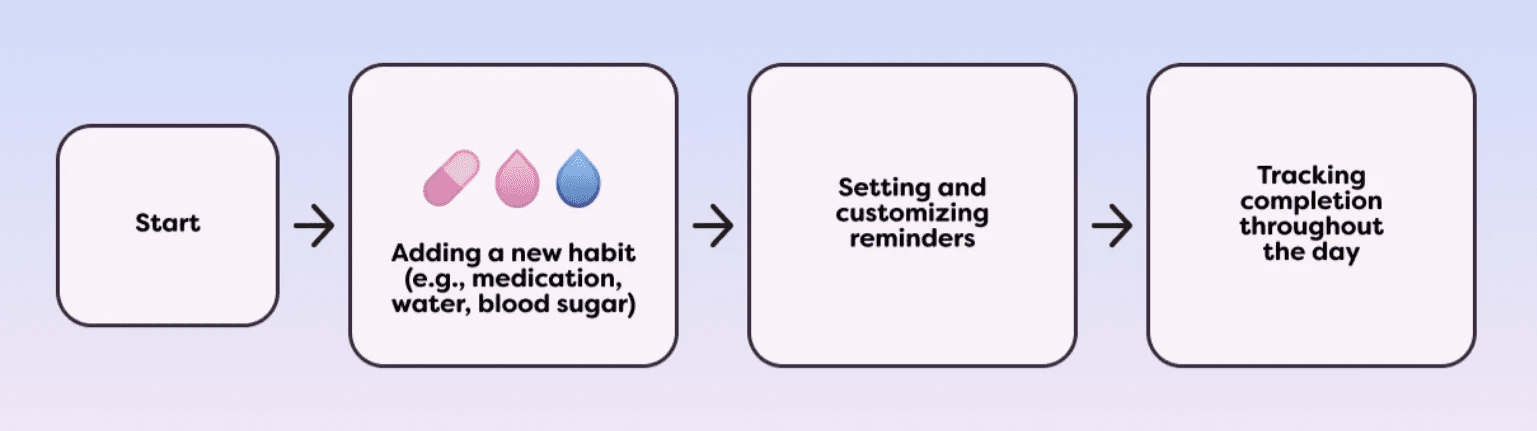
I reorganized the habit setup, daily logging, and weekly recap flows to create a more predictable experience. Onboarding was reduced from five screens to three, with a focus on intuitive navigation and immediate clarity. The goal was to help users begin tracking habits quickly without feeling overwhelmed.
Wireframing and Prototyping
I created low‑fidelity wireframes to explore different habit input methods and reminder customization patterns. These early layouts focused on simplicity and calm visual structure. High‑fidelity prototypes introduced color‑coded progress rings, simplified habit cards, and a visual hierarchy designed to reduce cognitive load.
Usability Review
I conducted remote prototype walkthroughs with peers to evaluate comprehension, flow clarity, and emotional tone. Feedback showed improved understanding of streaks, faster daily check‑ins, and increased confidence in managing wellness habits. This guided the final refinements to layout, color contrast, and interaction patterns.
Key Design Decisions
DailyCare’s redesign focused on creating a calm and predictable experience for neurodivergent users and older adults. Every design choice supported reduced cognitive load, clearer visual hierarchy, and gentle motivation.
Soft gradients and rounded components These visual elements create a calmer interface that feels supportive rather than demanding.
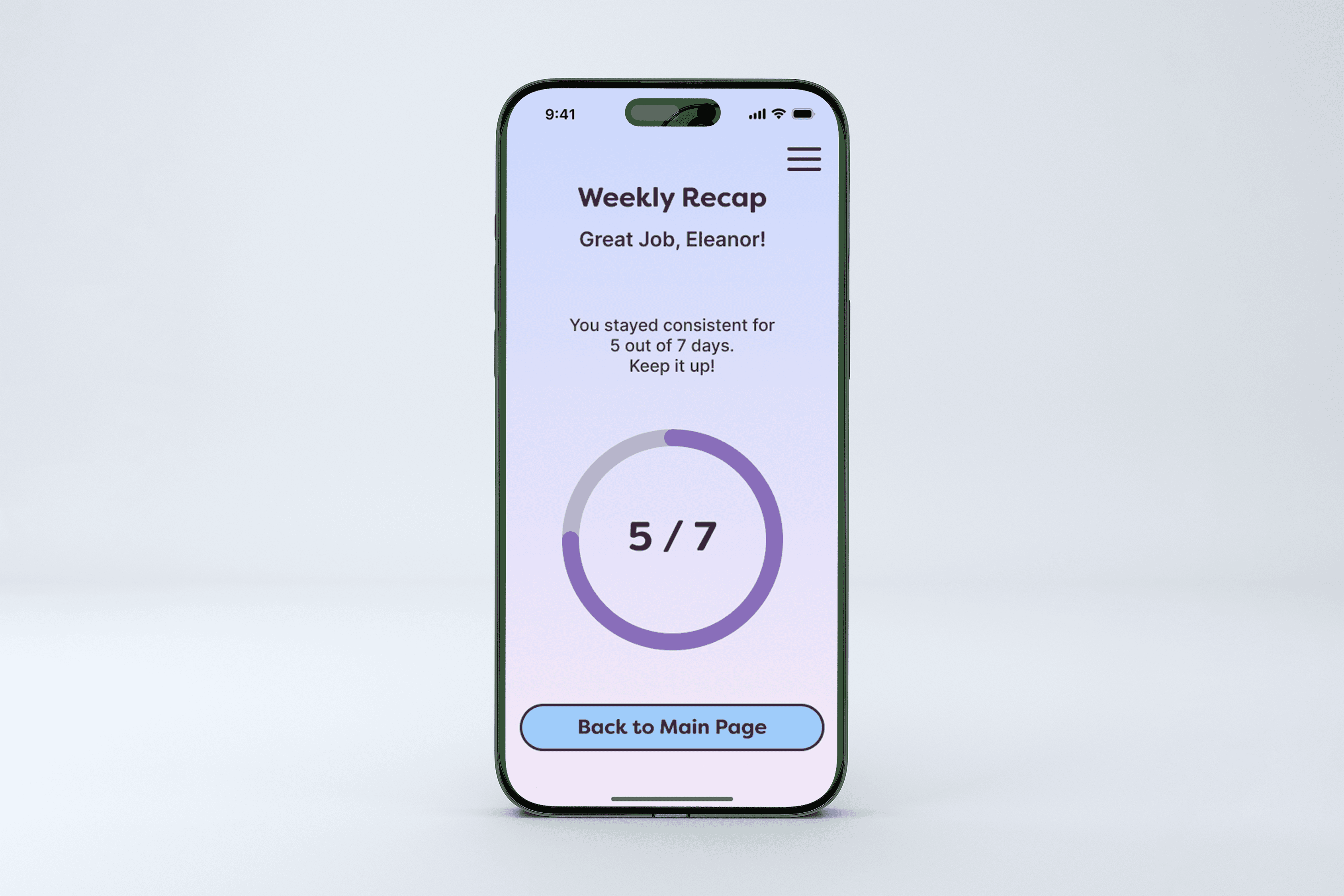
Gentle progress indicators Progress rings replaced reward‑heavy streak systems to reduce pressure and emotional fatigue.
Clear hierarchy in onboarding Onboarding screens were simplified so users could understand options quickly without feeling overwhelmed.
Lightweight habit creation Habit setup was reduced to minimal steps, helping users begin tracking routines with confidence.
Predictable daily check‑in flow The daily routine was designed to feel consistent and easy to complete, supporting long‑term engagement.
Accessible color contrast and typography Visual choices followed accessibility standards to support older adults and users with sensory sensitivities.
These decisions worked together to create a calmer, more supportive habit tracking experience that aligns with user needs and reduces friction throughout the app.
Before & After Improvements
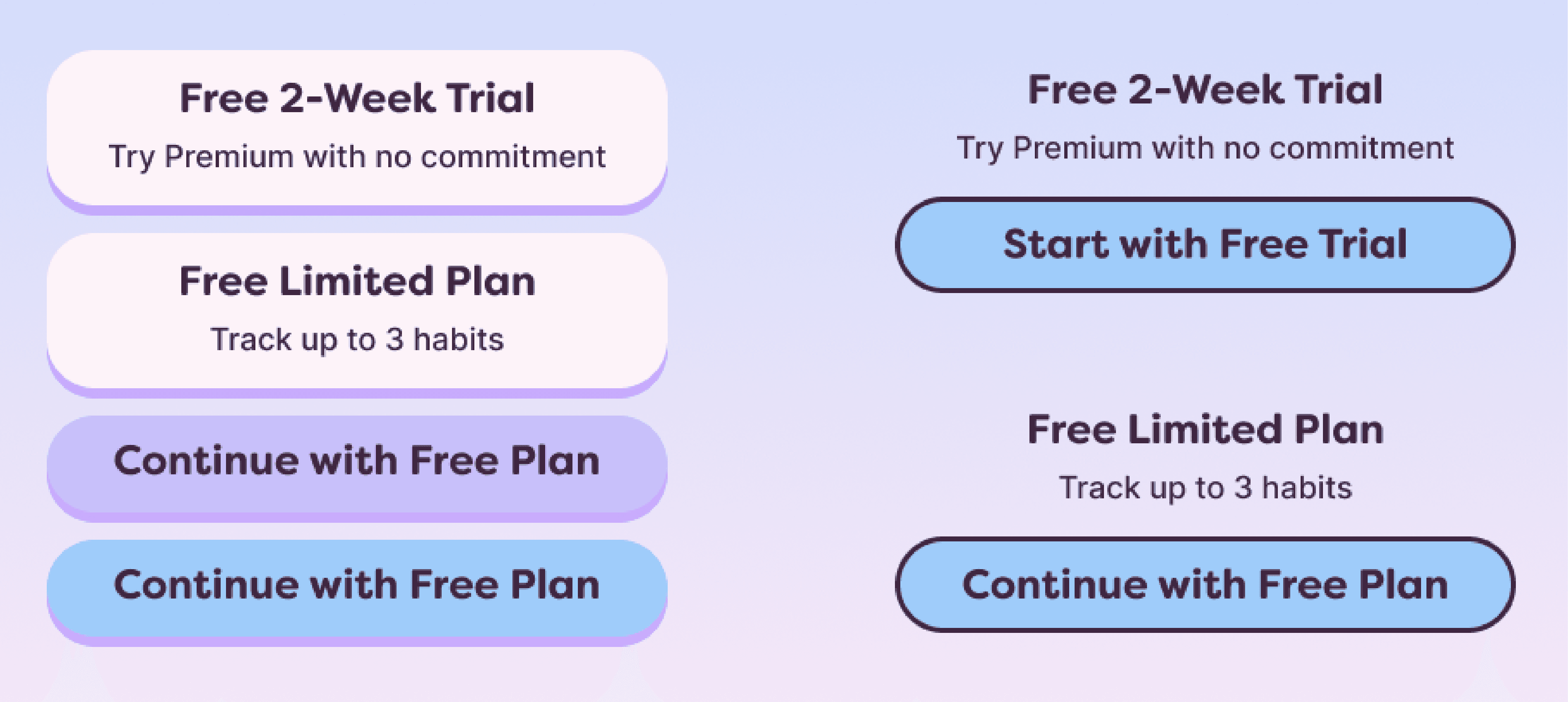
DailyCare’s original experience created friction during onboarding and early habit setup. Users struggled with confusing plan hierarchy, overwhelming screens, and motivation systems that felt pressured rather than supportive. Habit creation required too many steps, and visual hierarchy made it difficult to understand what to do next.
The redesigned experience focuses on clarity, calm visuals, and predictable flow. Onboarding was simplified so users could begin tracking habits quickly. Visual hierarchy was strengthened to make choices easier to understand. Motivation was reframed through gentle progress indicators instead of reward‑heavy streaks. Habit setup was reduced to minimal steps, creating a more accessible and emotionally sustainable experience.
Before
Confusing plan hierarchy
Overwhelming onboarding
Too many screens
Reward‑heavy motivation
Rigid habit setup
After
Clear visual hierarchy
Simplified onboarding
Fewer screens
Gentle motivation
Accessible habit setup
These improvements created a calmer and more intuitive experience that supports long‑term consistency for neurodivergent users and older adults.
Results
The redesign improved clarity, reduced friction, and created a calmer experience during prototype walkthroughs. Onboarding was reduced from five screens to three, making the setup flow more direct and easier to understand. Daily check‑ins required fewer taps, and simplified visual hierarchy made progress comprehension nearly instant. The new interaction patterns felt more predictable and supportive, especially for users managing multiple wellness routines.
These improvements created a more intuitive flow and increased willingness among reviewers to continue exploring the app during testing.
Conclusion
DailyCare strengthened user engagement and helped people feel more in control of their wellness journey. By combining data‑driven simplicity with gentle visual motivation, the app now supports long‑term consistency without overwhelming users. Through this project, I deepened my understanding of behavioral design, accessibility, and creating calm, supportive experiences for health‑focused users.